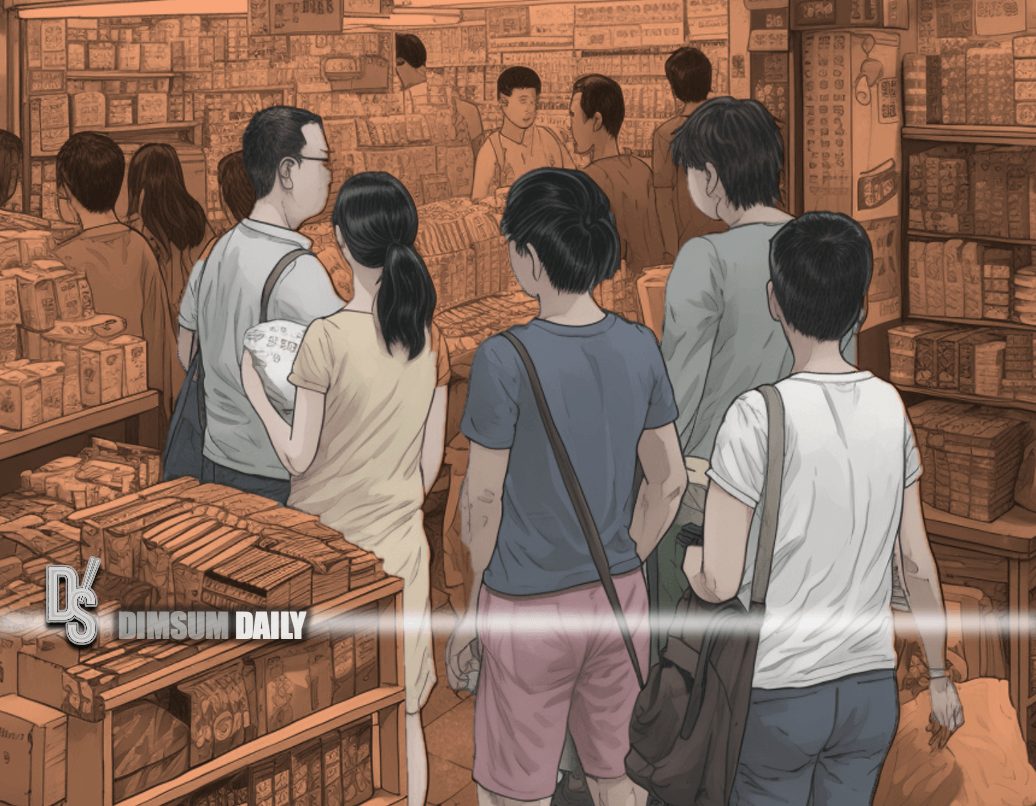
26th December 2024 – (Hong Kong) In the heart of North Point, T.momo Shopping Mall‘s latest opening draws crowds that would make any high-end retailer envious. Yet these shoppers aren’t pursuing premium brands – they’re hunting for HK$2 razors and HK$12 sock bundles. This scene encapsulates Hong Kong’s dramatic retail transformation, where value has become the new luxury.
The rise of “grassroots retail revolution” isn’t merely a pandemic aftermath. It represents a fundamental restructuring of Hong Kong’s consumer landscape, driven by shifting economic realities and evolving spending habits. From HK$39 “two-dish rice” establishments to HK$70 express haircut shops, these budget-friendly businesses are rewriting the rules of Hong Kong’s retail playbook.
The numbers tell a compelling story. Traditional retail sales plummeted 11.5% in May 2024, yet T.momo has expanded to 11 locations in just two years. This paradox reflects a deeper economic recalibration, where middle-class consumers increasingly embrace what were once considered “budget” options.
“Hong Kong’s retail transformation isn’t about poverty – it’s about pragmatism,” explains Dr. Raymond Wong, a retail economist at the Chinese University of Hong Kong. “We’re witnessing a fundamental shift in consumer psychology, where value-seeking behaviour has become socially acceptable across all income levels.”
The success of T.momo exemplifies this shift. Their North Point store’s Christmas Day opening drew crowds reminiscent of luxury store launches, but with a crucial difference – customers celebrated finding household essentials at prices that undercut even Taobao, China’s e-commerce giant.
This seismic shift in consumer behaviour stems from multiple economic pressures converging on Hong Kong’s middle class. Property prices, despite a 30% correction from their peak, remain dauntingly high relative to incomes. The Hang Seng Index’s prolonged slump has eroded wealth effects, while geopolitical tensions cast shadows over future prosperity. We’re seeing a profound reset in spending psychology. Hong Kongers who once splurged on premium experiences now take pride in hunting bargains. It’s not just about saving money – it’s about smart consumption becoming a lifestyle choice.
The success of the “HK$70 haircut” phenomenon perfectly illustrates this transformation. These no-frills barbershops have proliferated across prime locations previously dominated by upscale salons. Their bare-bones service model – 10-minute cuts, no washing, no styling – has attracted professionals who once wouldn’t have considered such options. Meanwhile, the “two-dish rice” revolution has reshaped Hong Kong’s dining landscape. These establishments, offering hearty meals for under HK$40, now serve everyone from construction workers to financial professionals. The quality, while basic, meets a crucial market need for affordable, quick sustenance.
T.momo’s business model represents perhaps the most sophisticated evolution of this trend. By leveraging direct relationships with mainland manufacturers and capitalizing on falling commercial rents, they’ve created a retail ecosystem that often undercuts online platforms. A HK$2 razor set that costs HK$11 on Taobao exemplifies their pricing power.
“What’s remarkable isn’t just the low prices,” notes Professor Terence Chong of Chinese University. “It’s how these businesses have legitimized budget shopping for the middle class. They’ve removed the stigma from bargain-hunting, making it almost fashionable.”
This transformation carries broader implications for Hong Kong’s economic identity. The city’s reputation as a luxury shopping paradise is giving way to a more nuanced retail landscape. While high-end retail remains significant, the explosive growth of value retailers suggests a permanent shift in consumer behaviour.
The long-term implications of this retail revolution extend far beyond mere pricing strategies. Hong Kong’s evolution from a luxury shopping paradise to a value-conscious marketplace signals a fundamental restructuring of its economic DNA. This shift isn’t cyclical – it’s structural.
Traditional retailers face an existential challenge. The success of T.momo and similar ventures demonstrates that Hong Kong consumers have permanently altered their value calculations. Even when economic conditions improve, the newfound appreciation for budget alternatives is likely to persist. As one retail analyst puts it, “You can’t put the bargain genie back in the bottle.”
Yet this transformation isn’t necessarily negative for Hong Kong’s economy. The emergence of sophisticated budget retailers has created new business opportunities and jobs, while making the city more liveable for its residents. The proliferation of affordable options has effectively created a parallel economy that serves both necessity and choice.
“Hong Kong isn’t becoming poorer – it’s becoming smarter,” argues Dr. Raymond Wong. “This new retail landscape reflects a maturing market where value and efficiency take precedence over prestige and presentation. It’s a model that may prove more sustainable in the long run.”
Looking ahead to 2025 and beyond, this trend appears set to accelerate. Commercial property owners are already adjusting rental expectations, while more mainland manufacturers seek direct partnerships with Hong Kong budget retailers. The success of T.momo has sparked interest from other potential market entrants, suggesting increased competition in the value retail space.
Perhaps most significantly, this retail revolution reflects Hong Kong’s ability to reinvent itself in response to changing circumstances. Just as the city transformed from a manufacturing hub to a financial centre, it’s now evolving from a luxury shopping destination to a more balanced retail ecosystem that serves all segments of society.
The future of Hong Kong retail isn’t about choosing between luxury and budget – it’s about creating a sustainable marketplace where both can coexist. In this new landscape, success will depend not on prestigious brand names or prime locations, but on delivering genuine value to increasingly sophisticated consumers. It’s a transformation that may ultimately strengthen, rather than diminish, Hong Kong’s position as a global retail hub.