
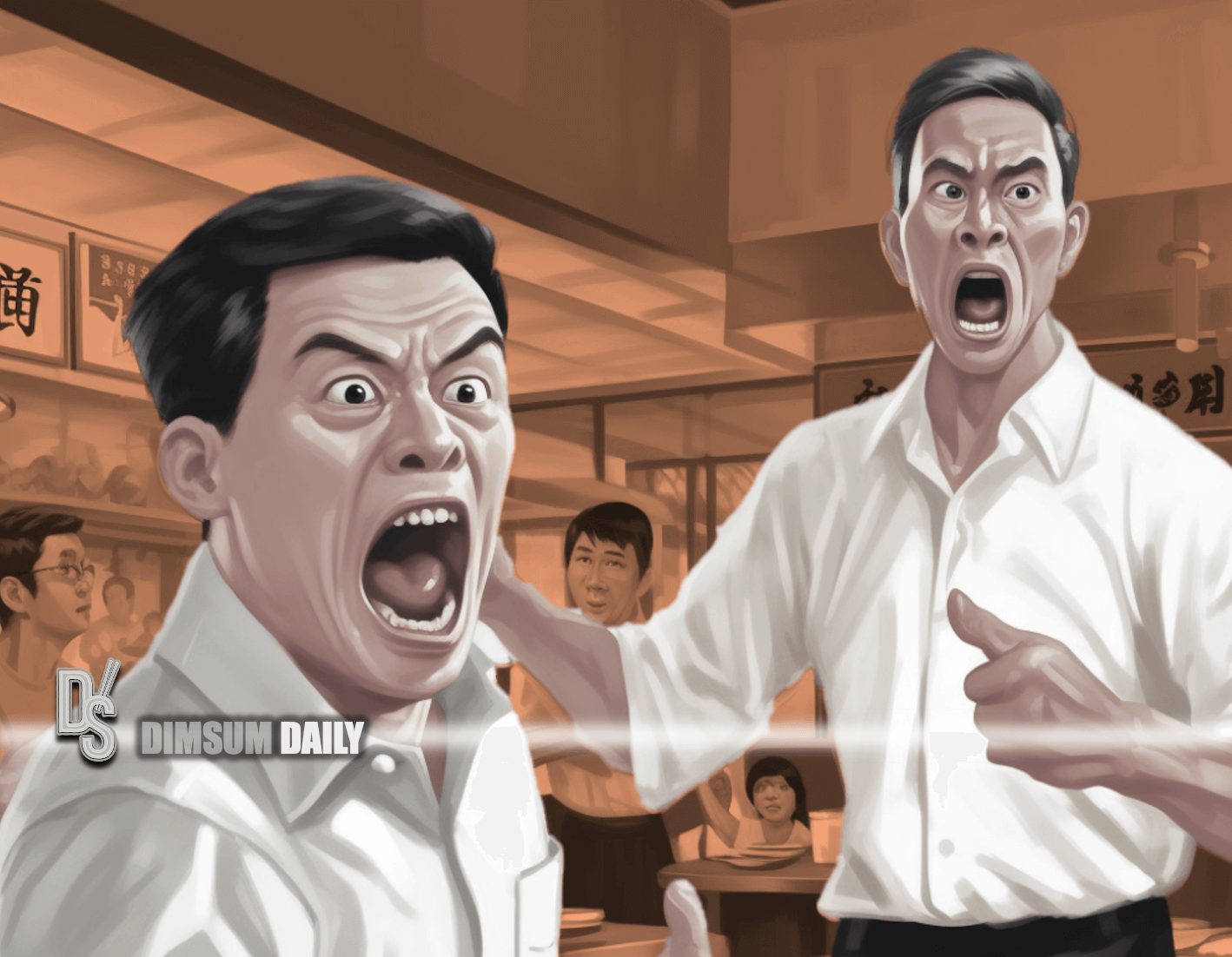
31st December 2024 – (Hong Kong) Amid Hong Kong’s latest ambitious tourism plans, where Blueprint 2.0 envisions the city becoming Asia’s premier destination, one troubling issue continues to loom large. Disgruntled visitors continue to vent their anger at rude waiters, unpleasant shopkeepers, and unscrupulous taxi drivers, whose brusque demeanours have become an all-too-familiar stain on the Hong Kong experience. The steady stream of grievances flooding social media and travel forums serves as a scathing indictment of the city’s deep-rooted hospitality crisis, undermining the government’s aggressive marketing blitz to rebrand Hong Kong as a world-class destination.
The 2024 roll-out of the Culture, Sports and Tourism Bureau’s “Let’s Go the Extra Mile” campaign was meant to instil a new service-oriented ethos in Hong Kong’s frontline hospitality staff. Plastering celebrity ambassadors like Louis Koo and Jessica Hsuan across TV, outdoor and social media channels, the HK$70 million push aimed to dispel the city’s entrenched reputation for poor customer service by showcasing model examples of providing warm, attentive hosting for tourists.
Yet judging by the steady stream of online grievances, the campaign has fallen woefully flat. Barely weeks after its debut, a swathe of fresh complaints have flooded Chinese travel forums like Xiaohongshu, with Mainland visitors bemoaning their myriad encounters with surly restaurant staff, impolite salespeople and rip-off cab drivers.
“The service quality in Hong Kong is terrible,” fumed Jacqueline Wang, a 20-year-old Chinese student based in the U.K., after a recent trip. “No one came to serve when my friend and I entered a dessert restaurant, so we had no choice but to hail the waitress. Shockingly, she responded by throwing a menu on the table.”
Wang is far from alone in her dissatisfaction. Another Taiwanese tourist, shared a similar gripe about being treated discourteously by a chain restaurant waiter clearly more interested in rushing him than taking his order: “Once I entered, the waiter told me to step aside if I was not ready to order,” he recounts. “It seemed like he didn’t care about losing a customer.”
These kinds of cringe-worthy interactions have become all too common for visitors, gravely undermining the Hong Kong Tourism Board’s aggressive global marketing efforts to lure free-spending travellers. In the 2019 Smiling Report, a survey ranking customer service across 29 territories, Hong Kong fared among the world’s most unwelcoming destinations – trailing far behind the global average for hospitality with a lacklustre “smile score” of just 56 out of 100.
While poor service has long plagued Hong Kong, the pandemic raised the stakes in tackling this endemic malaise. As the city begins rebuilding its US$32 billion tourism economy battered by three years of travel disruptions, the onus is on providing a first-class experience appealing enough to convince international travellers to make Hong Kong their preferred destination over rivals like Singapore, Bangkok and Tokyo.
For years, front-line staff have deflected blame for their brusque disposition, pointing the finger at excessive workloads, paltry wages and gruelling schedules that have demoralised an industry known for its thankless toil. Underscoring how dire the labour crunch has become, Hong Kong’s taxi trade recorded a 52.8% year-on-year surge in complaints about drivers refusing hirers and overcharging in 2023.
Based on insider accounts, the seeming hopelessness of these front-line roles goes a long way in explaining the widespread apathy. Take Tsoi Chung-kin, chairman of the Retail and Wholesale Trades Employees Association, who sympathised that “retail workers now are responsible for taking care of 10 tables of customers, compared with three or four before.” With waiters scrambling between a formidable volume of diners, episodes of inattentiveness and neglect are inevitable.
The excessive workload only compounds the physical and mental burnout from Hong Kong’s notoriously punishing work schedules. Mary Little Two, an anonymous social media activist who has worked over a decade in restaurants, revealed a dystopian reality: “Restaurant workers are often considered ‘Supermen’ considering the amount of work they are loaded with. I often have to take care of a full house of 75 guests with only three other co-workers.”
Little Two’s sobering depictions of the daily grind – endless hours of being on one’s feet with no breaks, combined with the inevitability of dealing with unruly customers – highlight how staff disillusionment is an understandable, if unacceptable, byproduct of an exploitative industry. As Tsoi recounted, “Some workers may have to work 12 hours a day without a break. The working hours are long, requiring workers to stand for extended periods. These affect workers’ attitude and performance.”
While improving frontline wages alone cannot reverse this inertia of indifferent hospitality overnight, labour leaders insist it is an indispensable first step in restoring a sense of dignity, motivation and enthusiasm that has been crushed out of the city’s service class.
“After standing for two or three hours, retail workers should be allowed to rest for ten to 15 minutes,” Tsoi advocated, “The government should legislate to make it mandatory for employers to let workers take a break after working for two to three hours.”
His calls were echoed by Cheung Lai-ha of the Retail, Commerce and Clothing Industries General Union, who bemoaned how staff “have no time to learn or upskill themselves, which is not good for the industry’s future development.”
Beyond reforming draconian labour practices, there is also a pressing need to provide remedial training to help service staff meet the sophistication and heightened standards expected of a world-class travel destination. “Companies used to teach employees how to treat customers with courtesy, but this kind of training is quite rare now,” lamented Tsoi.
If visitor complaints are any gauge, Hong Kong’s frontlines are long overdue for a full-fledged overhaul in soft skills – from mastering service etiquette, to honing emotional intelligence in diffusing tense situations, to simply nurturing a more gracious, polished disposition. As the city vies to leapfrog rivals and assert its preeminence as the region’s tourism capital, elevating its human capital is a fight it can ill-afford to neglect.
Confronting its hospitality woes is not just about saving face or dodging embarrassment for Hong Kong. The stakes are existentially higher – a flourishing tourism trade is one of the few economic engines left to revitalise the city’s battered US$350 billion economy in the wake of the Covid-battered years, severe brain drain and protracted decline of its financial sector.
Getting service standards up to par with Singapore or Tokyo is an imperative for Hong Kong to unlock its full potential as an aspirational travel destination, and the litmus test of whether it can truly deliver on its vaunted reputation for world-class efficiency and cosmopolitan sophistication. For a metropolis harbouring such lofty ambitions, its shoddy hospitality has remained an unseemly albatross for far too long. If the recent ineffectual courtesy campaign is any indication, both the public and private sectors will need to launch a deeper reboot of the city’s hospitality culture and labour practices.