

31st December 2024 – (Hong Kong) As the midnight countdown begins on New Year’s Eve, Hong Kong’s moneyed elite will raise their crystal flutes brimming with premium champagne and toast to another year of decadent excess. Glistening on their canapes, tiny black pearls of luxury will adorn the celebrations – caviar, that most opulent of appetisers. But this year, that first indulgent mouthful should leave a bitter taste, for behind caviar’s glamorous veneer lies a sordid tale of cruelty so appalling it would curdle even the steeliest of constitutions.
In 2023, Hong Kong imported over US$6.46 million worth of caviar, an 11.96% increase from the previous year and a staggering 167.28% spike over three years. Clearly, our city’s rapacious appetite for these fish eggs shows no signs of waning, despite growing ethical concerns over the inhumane practices involved in sourcing them. It’s a dark hypocrisy that Hong Kong, so keen to market itself as Asia’s culinary capital, continues embracing a delicacy that involves mutilating living creatures in one of the cruellest ways imaginable.
The brutal reality is that caviar remains commercially viable only through horrific practices that should have no place in a progressive, compassionate society. Whether sourced from the wild or industrialised farms, extracting caviar invariably involves a grisly process of slicing open the abdomens of pregnant sturgeon and forcibly removing their eggs. These remarkable fish, whose ancestry dates back over 200 million years, are essentially eviscerated while still alive and then discarded, their lives sacrificed for a few mouthfuls of bursting orbs to decorate the plates of Hong Kong’s high society.
Even sourcing caviar from aquaculture does little to mitigate the brutality. In a shocking exposé by Animal Justice, undercover footage from a Canadian caviar farm revealed a husbandry regimen so cruel, so devoid of ethics, that it should turn the stomachs of all but the most jaded gourmands. Sturgeons were shown being roughly captured and stabbed repeatedly in the abdomen by workers checking for egg maturity, with no apparent anesthesia. Other deeply distressing scenes captured intelligent fish being hauled out of their cramped tanks and having tubes shoved down their gullets to forcibly suck out their eggs.
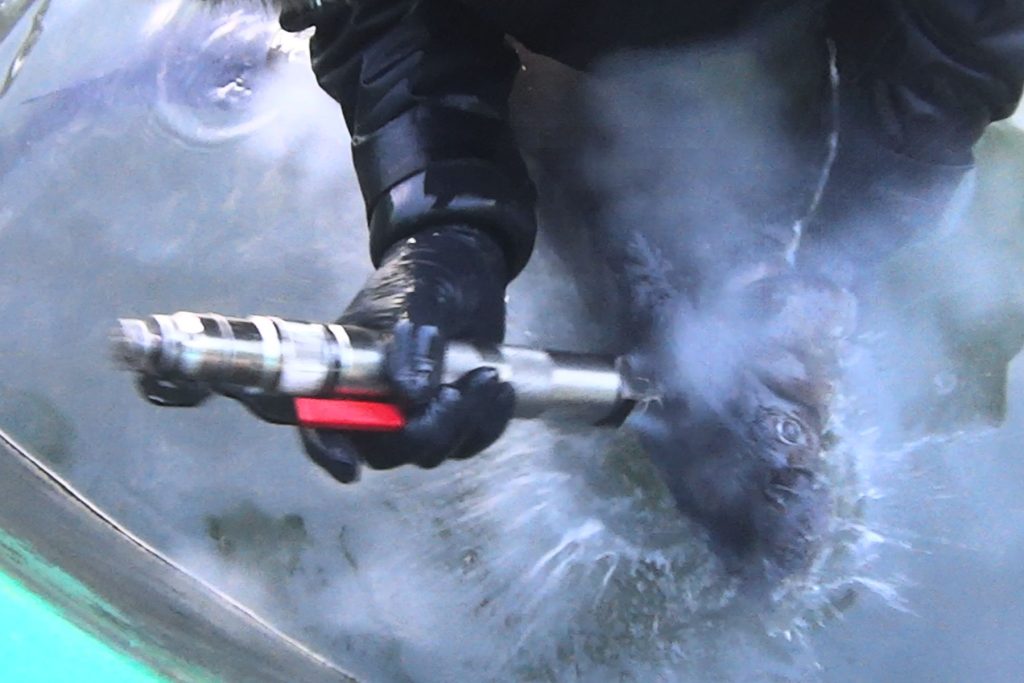
Most appalling was the tragic case of “Gracie”, a 30-year-old sturgeon who had spent her entire life confined to a barren tank after being stripped of her eggs through this agonising procedure on an annual basis over decades. Her permanence imprisonment was so utterly wretched, so devoid of dignity, that it robbed this storied species of what little majesty still remained after millennia of human exploitation.
One might think such stomach-churning barbarism would be confined to rogue outfits operating on the fringes of the industry. But horrifyingly, the farm in question is certified as “sustainable” and even endorsed by several prominent environmental watchdogs – a searing indictment of the ethical bankruptcy endemic throughout this sordid trade.
Hong Kongers can surely no longer turn a blind eye to these repugnant practices poisoning the reputation of our city’s culinary scene. This is not mere handwringing rhetoric – overwhelming scientific evidence confirms that fishes like sturgeon are intelligent, complex-brained vertebrates capable of experiencing significant trauma, pain and suffering akin to mammals. Ethologists have documented how these long-lived species engage in social learning behaviors and boast impressive spatial memories and migratory abilities. To inflict such misery on these remarkable creatures solely for the fleeting pleasure of an expensive garnish is a moral abomination.
Some caviar apologists claim that these ancestral delicacies occupy an indispensable place in global culinary heritage. But the same feeble reasoning could be used to defend myriad unconscionable acts that societies have rightly consigned to the dustbin of history. Our world evolves, ethics advance, and what was once accepted practice is recognised as abhorrent. Hong Kong need only look to jurisdictions like California, which has banned the sale of products sourced through equally barbaric methods like force-feeding birds to produce foie gras. Cruelty can never be tradition’s excuse.
Others may protest that even if sourced cruelly, the minuscule global caviar supply renders its consumption relatively environmentally sustainable. But the same cannot be said for the industrial-scale carnage required to feed insatiable sturgeon farms. To plump up these colossal fish, aquaculture pirates trawlers across our oceans, stripping out entire marine food webs from the krill and bait fish species that underpin entire ocean ecosystems up to the larger carnivorous feeder fish like herring and sardines. This ecocidal pillaging is as unsustainable as it is devoid of ethics or empathy for non-human life.
There are also the shady forces that lurk in caviar’s lucrative shadow. This high-value delicacy has enriched organised crime syndicates worldwide who facilitate poaching, smuggling and other wildlife trafficking that pushes species like beluga sturgeon closer towards extinction. Caviar’s bloody trail stretches from the Caspian Sea’s depleted shores to Hong Kong’s dried fish markets, where these criminals find ready buyers among our most elite restaurants and private kitchens. Every glistening egg consumer is complicit in accelerating these endangered species’ demise.
Enough. Hong Kong’s fine dining scene offers diverse, imaginative and, crucially, ethical alternatives to caviar that need no longer be defined by this delicacy’s retrograde concept of luxury. Our city can discard this shameful, outdated status symbol and align itself instead with shifting moral and environmental values befitting our status as a world city. An easy first step would be for the Environmental Protection Department to strictly enforce and expand laws prohibiting the sale of any products obtained by cruelly overharvesting threatened species. Restaurants and retailers could then explore emerging, more humane alternatives like Caviar-X – a plant-based, protein-rich molecular replica indistinguishable from conventional caviar. Local chefs could spearhead educational campaigns to encourage consumers to savour equally umami-rich but far more ethical garnishes such as tobiko, salmon roe and even budget-friendly roe substitutes like seaweed pearls.
Ultimately, what Hong Kong’s fine diners crave from caviar is novelty, opulence and prestige rather than any innate flavour that cannot be replicated through more ethical means. With a vibrant culinary community already taking sustainability and progressive values seriously, this is an pivot our city can easily embrace.
This New Year’s Eve, as flutes of bubbly are raised, let Hong Kong cast off one of the last backwards-clinging artefacts disfiguring our fine dining scene. Those celebrating tonight can toast the dawn of a new era – one where true luxury is defined by compassion as much as culinary decadence. In 2025 and beyond, Hong Kong’s feast nights need no longer come at the cost of such unconscionable barbarism towards our fellow inhabitants on this planet we share. That first bite into a caviar-free canape can mark the first ethical mouthful in a socially progressive culinary renaissance. Hong Kong has outgrown caviar – let’s leave this grotesque relic in the cruelty of the past where it belongs.