3rd January 2025 – (Hong Kong) Few celebrities provoke the levels of feverish adulation bestowed upon Keung To, the 25-year-old Hong Kong singer whose improbable rise to megastardom defies rational explanation. The baby-faced heartthrob from the boy band MIRROR has inexplicably been voted the second “Most Handsome Man in the World” by the curators of the TC Candler “100 Most Handsome Faces” list, an annual ranking that ostensibly operates with the authority to determine global pulchritude.
If this accolade seems bewildering, it may help to understand the forces propelling Keung To’s ascent. An embarrassment of hometown adoration, stoked by legions of frenzied fans, has catapulted this thoroughly unremarkable young man to dizzying heights of fame and idolatry previously unimaginable outside his local fanbase. To the impartial observer, he is, at best, an innocuous entertainer of limited talents and ambitions—by Western standards, certainly no Chris Hemsworth, this year’s deserved number one.
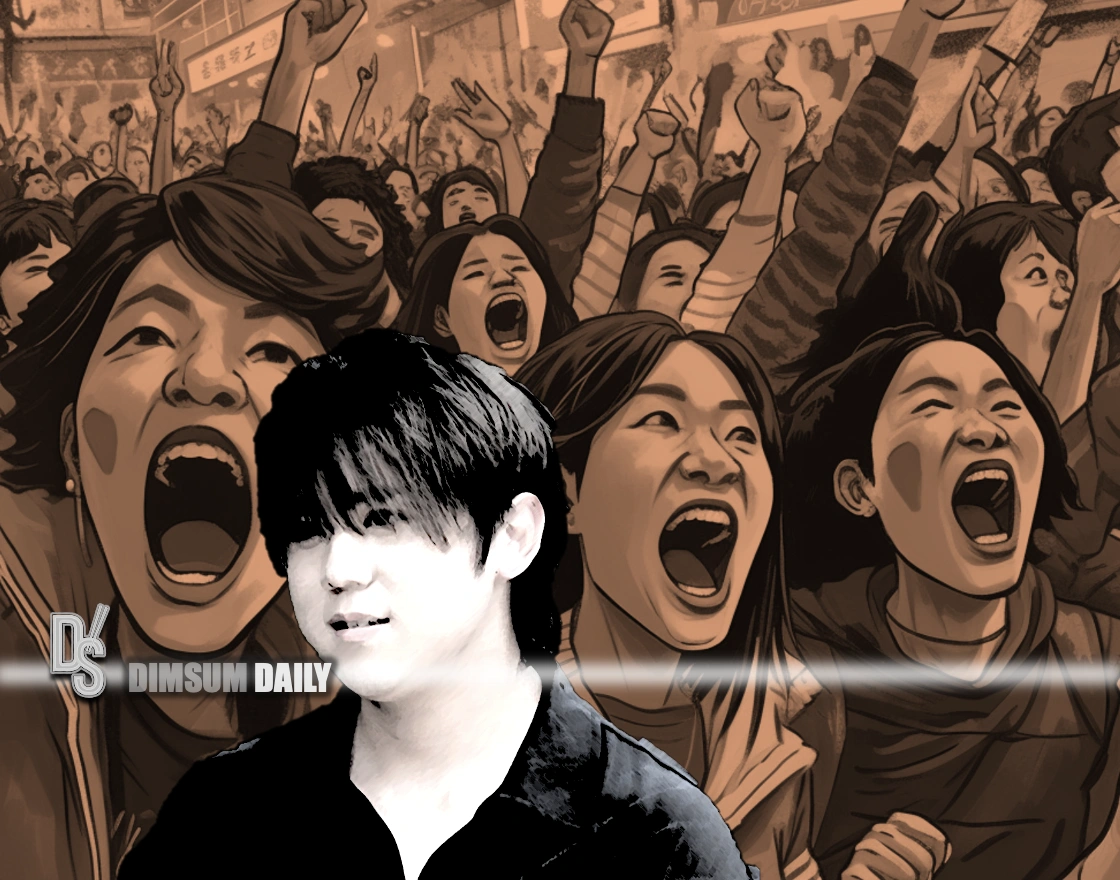
Yet Keung To’s fawning Hong Kong acolytes have willed him into a figure of adulation bordering on the messianic. One can scarcely fathom their fanatical zeal which transcends benign hero-worship to disturbing realms of obsession and compulsion. This cult-like mania is most vividly expressed through the conspicuous consumption that has become de rigueur for the devoted MIRROR fan.
Consider the auction of a personalised vehicle registration plate bearing Keung To’s name, which provoked a bidding frenzy among his worshippers. While the sale opened at a modest HK$5,000, one particularly afflicted individual ultimately secured the coveted plate for an astounding HK$38,000—no small sum in a city of such punishing wealth disparities. This eye-watering amount would surely beggar belief among global fan communities; surveys indicate even the most devoted K-pop enthusiasts spend on average a relatively modest US$1,400 annually on merchandise.
For Hong Kong’s MIRROR fanatics, however, no expenditure is too extravagant in service of their idols. Followers habitually splurge millions to proliferate larger-than-life images of their heroes across the city’s skyline for member birthdays. Immense banners and gargantuan LED displays smother the exteriors of buildings, while publicity stunts like chartering the iconic Star Ferry for Anson Lo’s opulent birthday cruises have become par for the course, funded entirely by these fervid benefactors.
Such overt demonstrations of wealth and devotion would be considered unhinged in most societies. Yet Hong Kong’s entertainment obsessives revel in one-upmanship, their bottomless pursuits appearing to serve a perverse need to broadcast their idolatry through crass, materialistic love-bombing. Where infatuation should engender innocuous if passionate appreciation, MIRROR’s local fanbase appears to confuse deification with indulgence of their worst consumerist impulses. One can’t help but worry this toxic paradigm exploits the vulnerable through encouragement of self-destructive behaviour.
Indeed, MIRROR’s explosive popularity coincided with the isolating effects of the pandemic, their ascent functioning as a welcome distraction for many. However, some supporters may have overcompensated, developing unhealthy attachments amplified by lockdown-induced malaise. For individuals already susceptible to obsessive tendencies or compulsive spending habits, an all-consuming fixation like MIRROR fandom could catalyse spirals of self-harm. Psychological impacts abound as fandom evolves from benign escapism into unchecked acquisitiveness.
How this phenomenon perpetuates across Hong Kong entertainment circles becomes a matter of grave concern. Will the city’s cultural institutions continue enabling—and profiting from—this psychology of fanaticism? As fandom culture intensifies, can mechanisms be instituted to ensure balanced, responsible consumption without denigrating artistic appreciation?
This queasy juxtaposition is perhaps most apparent in the near-deification of Keung To himself. The galling irony is that, despite being thrust into the exalted company of legitimate celebrities by his vigilant supporters, he patently fails to resemble a traditional icon or objet d’adoration. With his puppy-dog eyes and tame visage, To possesses a homely, relatable appeal to his regional fanbase, but by global standards for male beauty hardly merits ranking above the genetically-blessed smorgasbord of Hollywood stars and heritage male models.
Admittedly, measures of human beauty are inevitably subjective, susceptible as they are to culturally-prescribed preferences and perceptions. An ethnically Chinese man like Keung To understandably radiates charm and relatability lacking in more conventionally handsome Western paragons. Still, his ranking as runner-up for worldwide male pulchritude seems a jarring misstep, decidedly out of step with any rational aesthetic criteria or popular consensus.
One might therefore deduce such a lofty accolade represents not a sincere appraisal of subjective male beauty, but rather an apogee of fan mania ascendant, fuelled by algorithmic manipulations that manifest as feverish ballot-stuffing campaigns. For there can be no alternative explanation for Keung To’s surreal coronation when ostensibly more photogenic paragons abound. The accolade emanates not from sober aesthetic consideration but from maniacal fandom’s escalating capacity to manufacture modern-day neo-idols who supersede longstanding standards of iconography.
Even the honoree himself seems discomfited by the honour, having comported himself with endearing humility in public addresses. “Please don’t put me on the list anymore,” Keung To playfully cautioned his advocates. “Every time these rankings come out, I feel utterly awkward.” Indeed, who can blame the boyish crooner for self-deprecatingly rejecting this laurel as “ridiculous”, insisting “The real handsome one is my dad!” A flattered Son’s attempt to deflect adulation from hovering super-fans is the hallmark of any rationally-adjusted celebrity, and arguably the sole aspect of Keung To’s narrative that evinces authenticity.
Beyond the banalities of Keung To’s personal demurral lie broader existential questions concerning the legitimacy of institutional arbiters like TC Candler in an era of technology-enabled institutional corrosion. When consensus idolatry can be so effortlessly shaped and perverted in our frenzied, socially disintegrated times, one must wonder whether such rankings hold any residual authority beyond institutionally bestowed but substantively hollow self-regard. What value do verdicts like the “Most Handsome Faces” index possess in our post-truth zeitgeist of coordinated misinformation? Are they aught but a derelict affectation, a self-preserving pantomime of institutional relevance that inadvertently enables mass delusions?
This line of questioning, while disconcerting, feels vital in the context of Hong Kong fandom’s overt and calculated mania. For what underlying compulsions are expressed when local MIRROR enthusiasts so tirelessly manufacture international accolades for their idols? Do their efforts represent the last vestiges of organic enthusiasm in our hyper-mediated age or, more troublingly, technology-augmented extremis metastasizing against an existential vacuum? In a world of infinite alienation and weaponised social misinformation, must we resign ourselves to fandom devolving into a pure spectacle where contrived idolatry becomes an end unto itself?
Ostensibly innocuous pursuits like the “Most Handsome Faces” catalogue are symptomatic of greater social malignancies—globalised loneliness, unmoored identities, and technological disaggregation. As atomised individuals grapple with the perpetual uncertainty of online existence, celebrity pied pipers like MIRROR inevitably beckon as convenient vehicles for catharsis and belonging. But what transpires when conventional fandom escalates into a compulsive pursuit of cult-like grandeur? How do we disentangle genuine ardour from self-annihilating groupthink in a celebrity-industrial ecosystem designed to promulgate the most radicalised behaviours?
These are questions without clear solutions; lamentations upon the unintended consequences of our innovations. They are, in essence, ruminations on millennial society’s advancing discontents. And yet they demand frank examination as the Keung To phenomenon burgeons into a parable of our times—a prism through which the full pathologies of internet-era iconography and fandom are refracted.
Only then can we develop full perspective. Past the superficial spectacle of an international ranking, past the vulgar materialism and industrial forces seeking to profit from fandom’s excesses, past our reflexive scorn for the culturally alien, exists the human core of MIRROR’s adulated centrepiece. In this respect, Keung To deserves some compassion amid the justified criticisms aimed at his cult of personality.
An earnest, even humble individual born into a hypermodern hellscape of social fragmentation and digital overstimuli, his ascendancy is both enabled and entrapped by the very technologies meant to emancipate. A manifestation of ambient angst, longing, and the millennial spiritual starvation exacerbated by COVID isolation, Keung To is, in his most charitable framing, an accidentally-appointed demigod born of sociocultural circumstance; an arbitrarily anointed chieftain for a Hong Kong generation yearning something—anything—resembling authenticity, community, meaning.
That he manifestly lacks the charisma or conventional iconoclasm typically associated with cultural idols, serving as an avatar almost by happenstance, only amplifies the existential poignancy underlying his cult’s rise. Here is a deity forged not of awe-inspiring individual merits but of profoundly human needs gone haywire in a technologically-augmented, connection-starved modern milieu. Keung To is not so much elevated through his own attributes as thrust upon a pedestal by an age desperate for respite from perpetual alienation yet misdirecting that craving into hollow placebos of online grandiloquence.
This is the pathology that must be diagnosed – not necessarily the quixotic illusions themselves, but the creeping social and spiritual deficits of our digitised century that make such illusions appealing, even necessary, to refuges. As we contemplate MIRROR’s cultish phenomena, the analysis rightfully begins not with their outrageous fan expenditures or Keung To’s specious accolades, but inwards towards the growing emptiness driving our collective subconscious to conjure ever-more grandiose illusions.
Herein lies the key inflection point: whether maladies like Keung To’s cult of personality mark the peak of our techno-societal discontents, blazing omens illuminating an urgent cause for course-correction. Or whether such excesses will be permitted to metastasize endlessly as technology’s destabilising impacts intensify, bearing ever-more delusory icons and unhealthy attachments in service of an isolating virtual existence. Will this Cult of Keung be recognised as a nadir to collectively overcome or an accelerant towards a troubling new normal?
The choice, while Hong Kong’s to instantiate through its celebrity culture, belongs to all who reckon with technology’s sociological implications. As the machinery of the digital age evolves in shocking new directions, a philosophical reckoning beckons over our very conceptions of meaning, iconography, and community. Through phenomena like MIRROR’s ascendancy, the wages of our inattention to these principles are made manifest. We have been given a startling glimpse at civilisational deficits gone awry.