
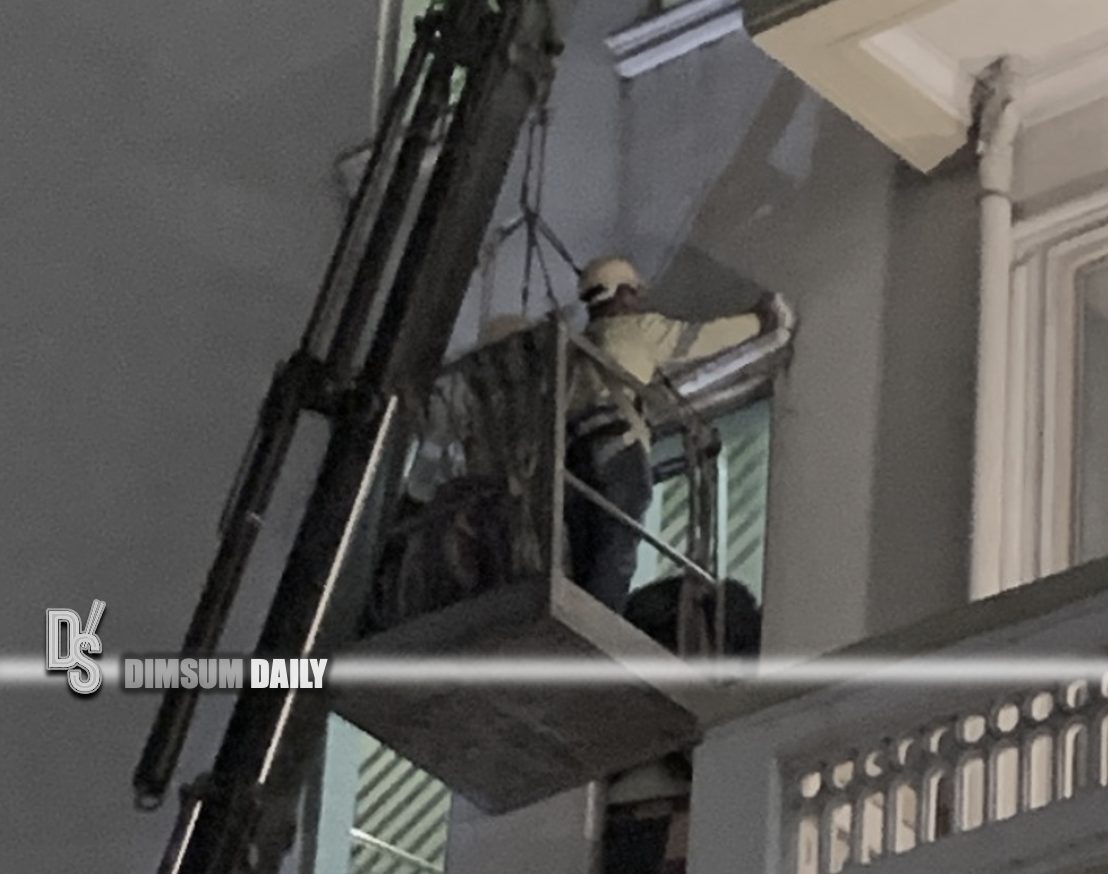
6th January 2025 – (Hong Kong) On the evening of 2nd January, the Buildings Department received a report from enforcement agencies regarding a potential safety hazard at a pre-war building located at 190 Nathan Road in Tsim Sha Tsui. The report indicated that part of the building’s exterior was loosening, creating a risk to pedestrians. Following this notification, the department dispatched personnel to assess the situation, confirming that a section of the second-floor facade was indeed in danger of detaching.
In collaboration with law enforcement, affected pedestrian walkways and portions of the roadway were immediately cordoned off. After conducting a risk assessment, officials determined that the loose structure posed an imminent threat to public safety and required swift removal.
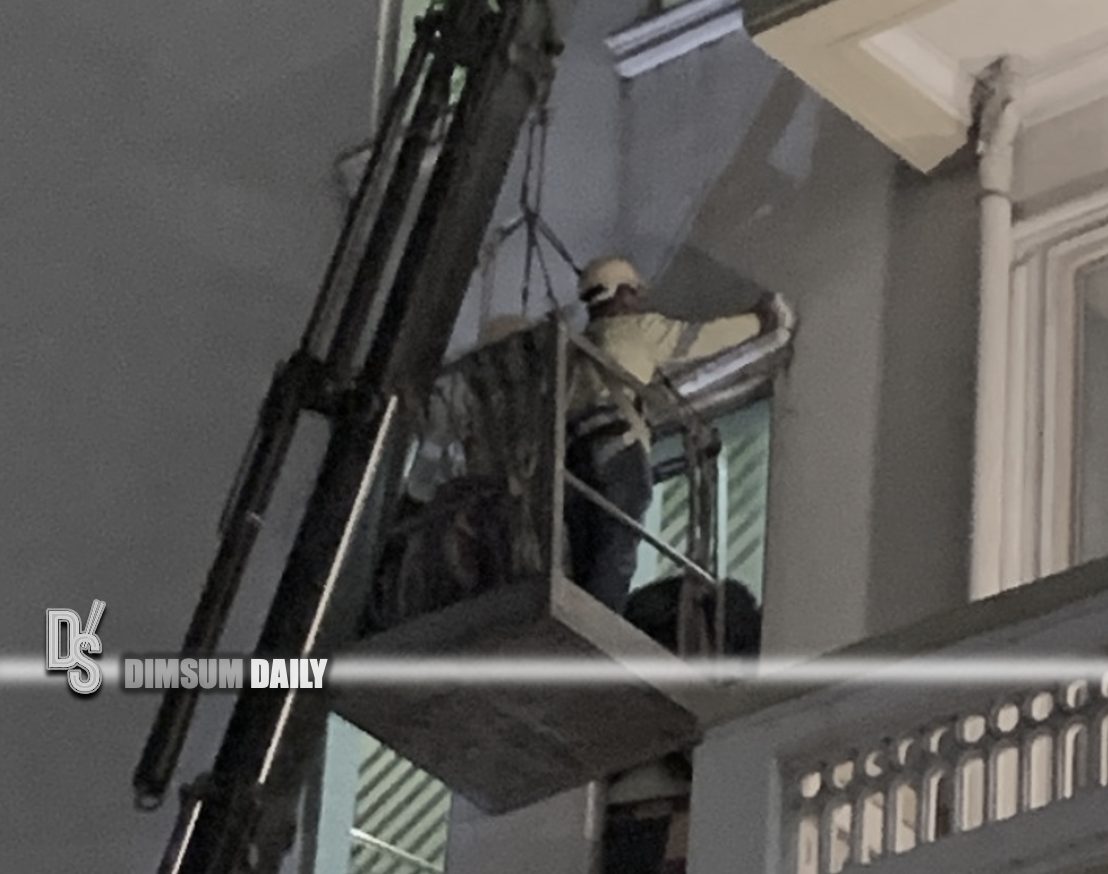
As the management company failed to arrange for a contractor to handle the situation promptly, the Buildings Department took the initiative to employ government contractors for emergency repairs. Using a crane, the contractors safely removed the loose section from the second floor within a short timeframe, ensuring the safety of the public. Once the operation was completed, the authorities reopened the affected areas to minimise disruption.
The Buildings Department has since reminded property owners and management teams of their responsibility to maintain and repair buildings adequately to safeguard public safety. Failure to do so could result in both criminal and civil liabilities.
The building in question, constructed between 1932 and 1933, is privately owned and was previously designated as a Grade 3 historical structure. Following debates over its status, the Antiquities and Monuments Office recommended upgrading its classification to a proposed Grade 1 historical building. However, after discussions, the Antiquities Advisory Board concluded that the proposal was erroneous and reassigned it a Grade 2 status.
The Antiquities Office clarified that while the building features a minimalist design, modifications had altered its original character, including the addition of entrances and staircases. These changes had significantly impacted the internal structure, leading board members to emphasise that not all old-looking buildings merit higher grading; evaluations should consider the overall integrity, including internal features.