
29th December 2024 – (Seoul) Two crashed commercial planes. Two hundred and seventeen dead. December 2024 will be remembered as the month when nature reminded us how fragile our mastery of the skies really is.
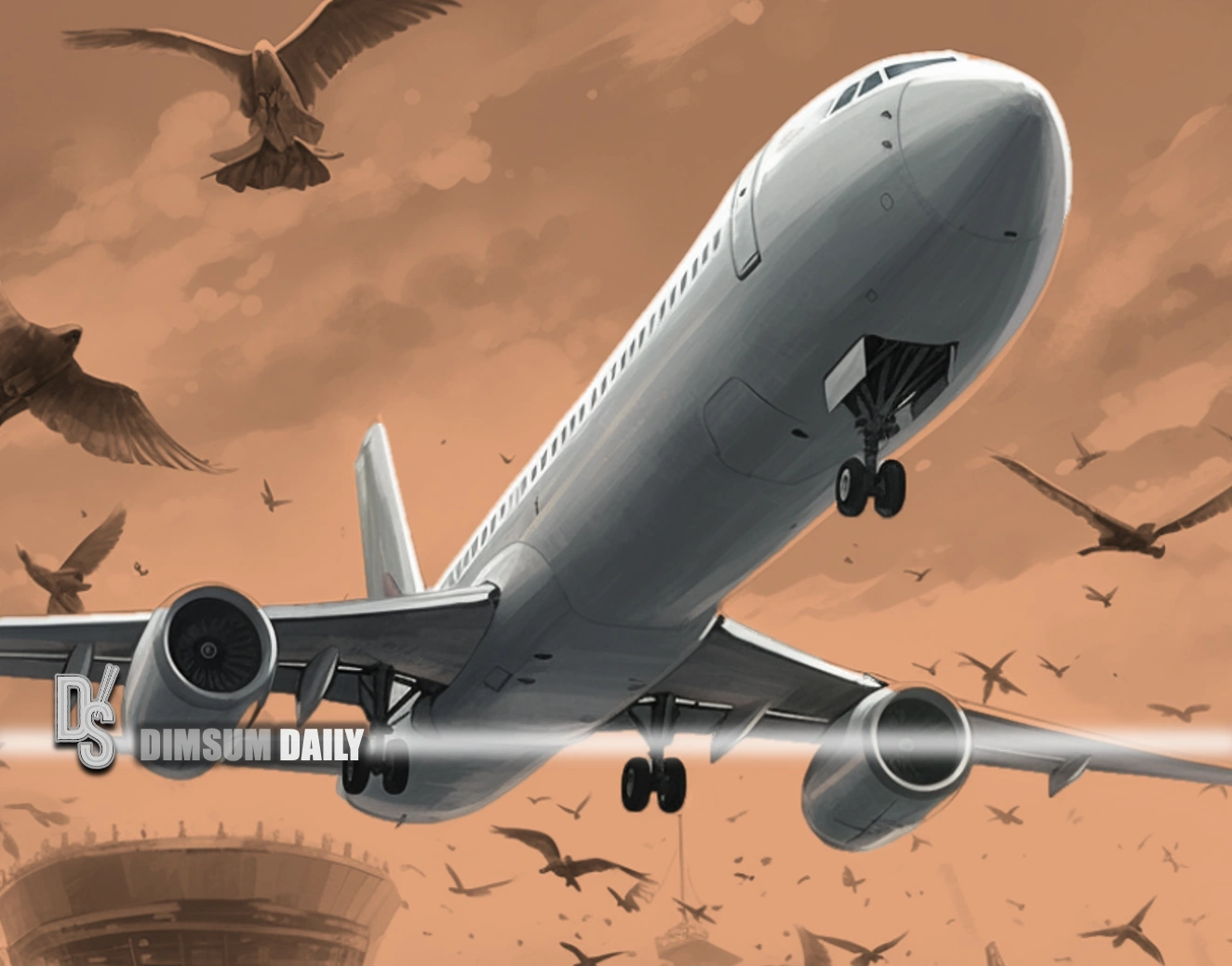
The Jeju Air disaster wrote itself into aviation history with brutal efficiency: 179 lives snuffed out when a bird strike allegedly triggered a catastrophic landing gear failure. The Boeing 737-800’s final moments – a metallic screech across tarmac before erupting into flames – turned a routine Bangkok-Muan flight into South Korea’s deadliest aviation disaster.
Several days earlier, Azerbaijan Airlines Flight J2-8243 fell from the sky near Aktau, killing 38. Initial reports pointed to birds. Then came whispers of Russian anti-aircraft fire. The truth? Perhaps lost somewhere between diplomatic cables and scattered wreckage across the Kazakh steppes.
In 2024 alone, American airspace recorded 19,400 bird strikes across 713 airports. Each incident represents a deadly lottery – most end in near-misses, some in emergency landings, and a few, like Jeju Air, in tragedy. Climate change twists the knife deeper. Dr. Paul Williams from Reading University doesn’t mince words: “Clear air turbulence is becoming more frequent and intense.” The science is simple – warming temperatures destabilise jet streams, creating invisible pockets of violent air that can throw aircraft around like toys. Ask the passengers of that Singapore Airlines flight – thirty-one injured, one dead, from turbulence that struck without warning.
The financial toll – US$328 million yearly from bird strikes alone in the US – reads like corporate accounting. The human cost defies such neat categorisation. Ask the families of those 179 souls aboard Jeju Air Flight 2216, or the 38 from Azerbaijan Airlines. Their loss transcends spreadsheets and safety protocols.
American Airlines’ December LaGuardia incident offers a glimpse into what could have been: one disabled engine, 190 lives hanging in balance, an emergency landing at JFK. They lived. Others weren’t so lucky.
Beneath the statistics lies a more ominous reality: our technological expertise could amplify our susceptibility. Quieter engines mean birds can’t hear planes coming. Urban sprawl pushes wildlife into flight paths. Our very attempts to fight climate change – wind farms, solar arrays – create new aviation hazards. The industry’s countermeasures read like a war manual: airports firing blank shots to scare birds, engineers shooting dead chickens at jet engines in laboratories, complex radar systems tracking avian movements. Yet nature keeps finding ways through these defences.
In 2025, the aviation environment embodies a perfect storm with rising bird populations, escalating turbulence, and geopolitical tensions, transforming civilian aircraft into potential targets, making every takeoff a calculated risk and every landing a triumph over probability.
Flying remains safer than driving – for now. However that statistical comfort offers little solace at 35,000 feet when an invisible air pocket throws passengers against cabin ceilings, or when a flock of geese turns both engines into twisted metal. Aviation has conquered distance but remains at nature’s mercy. Each successful landing isn’t just routine – it’s a reminder that we’re guests in an atmosphere growing more turbulent by the year. Technology will continue to advance, safety systems will improve, but nature – whether through bird strikes or violent air – maintains its power to transform routine flights into headlines. Not because we’ve failed to master the skies, but because mastery was always an illusion.