
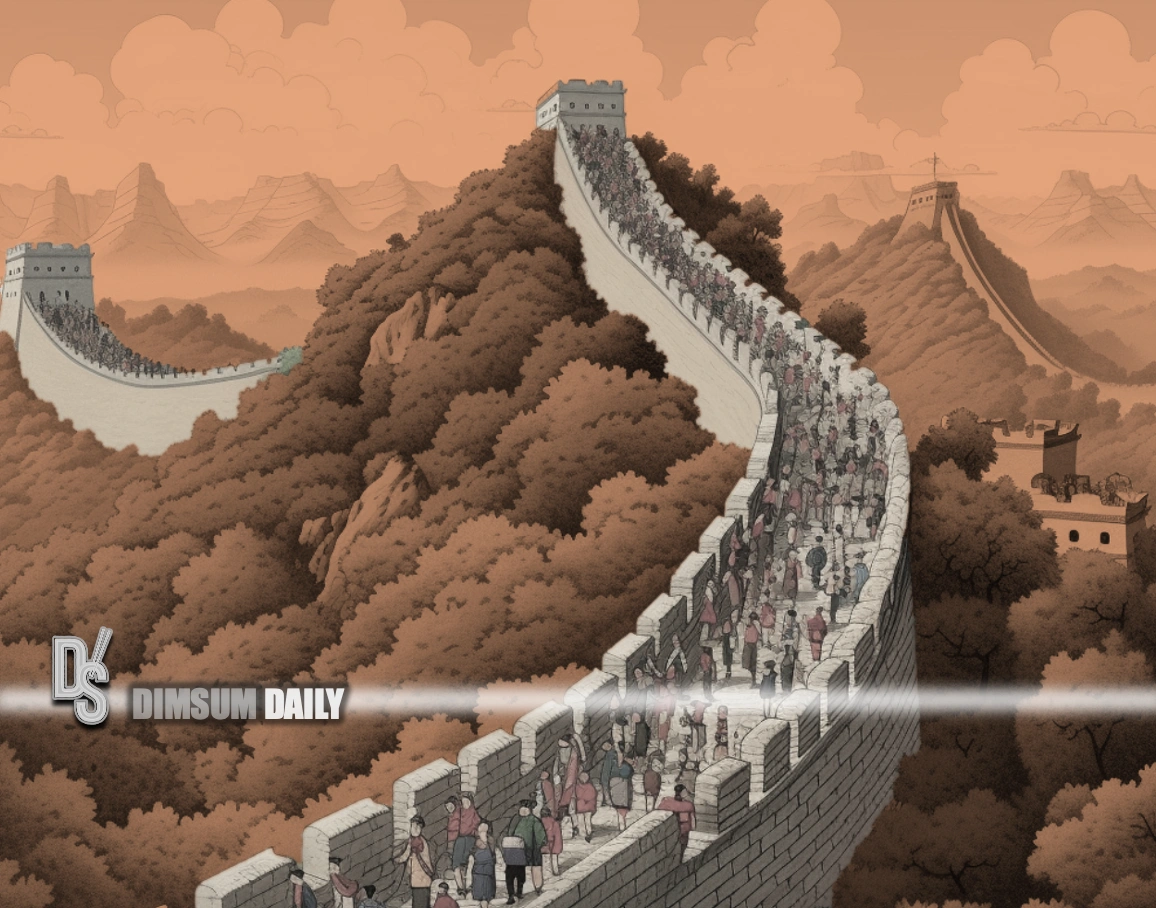
24th December 2024 – (Beijing) The dragon’s gates are swinging wide open. In a seismic shift that’s sending ripples through the global tourism industry, China has just rolled out its most ambitious visa-free initiative yet. The message is crystal clear: the Middle Kingdom is back in business, and this time, it’s playing for keeps.
With passport holders from 54 countries now granted access through 60 ports spanning 24 provincial regions, China has effectively painted half its territory in welcome signs. The new 10-day stay allowance isn’t just a policy tweak – it’s a tourism revolution in the making. The transformation is already visible in the data. In the first eleven months of 2024, foreign arrivals surged to 29 million, marking an 86% year-on-year increase. Yet these figures pale against pre-pandemic levels when China logged 98 million foreign entries and exits in 2019. Beijing’s ambitions are clear: not just recovery, but dominance.
This isn’t merely about holiday snaps at the Great Wall. The policy covers China’s economic powerhouses, from Shanghai’s gleaming towers to Guangzhou’s trading hubs. Think Silicon Valley meets ancient civilization, all wrapped in a ten-day exploration pass. The markets have responded with enthusiasm. Within hours of the announcement, international flight searches jumped 87% on major booking platforms. Hotel inquiries surged fivefold for the upcoming New Year period. Beijing’s gambit is paying off, and paying off fast.
The strategy reflects Beijing’s masterful grasp of economic leverage. By opening 24 provincial regions – including economic juggernauts like Jiangsu, Zhejiang, and Guangdong – China’s created a tourist-friendly corridor that just happens to showcase its technological and economic might. Coincidence? Hardly.
Consider the numbers beneath the headlines. Chinese tourism officials project the policy could generate upwards of £175 billion in annual tourism receipts by 2025. That’s not just ambitious – it’s a direct challenge to traditional tourism powerhouses like France and Spain.
The timing is impeccable. As global tourism rebounds from its pandemic slumber, China’s positioning itself as the ultimate destination for both leisure and business travellers. The 10-day window is particularly clever – long enough for meaningful exploration, short enough to leave visitors wanting more.
However, it’s the scope that’s truly revolutionary. From the ancient lanes of Xi’an to Shenzhen’s tech parks, from Hangzhou’s fintech hubs to Chengdu’s culinary scene, the policy covers China’s most dynamic regions. Notable exclusions like Tibet and Xinjiang only underscore Beijing’s strategic calculus.
The business community’s response has been electric. Major hotel chains are scrambling to expand their Chinese portfolios. Marriott alone plans to add 150 properties across China by 2025. Hilton’s not far behind with 125 new hotels in the pipeline. The message? Build it, and they will come. Domestic tourism infrastructure is transforming at warp speed. High-speed rail networks now connect 95% of cities above 500,000 population. Mobile payment systems like WeChat Pay and Alipay are being retooled for international visitors. Even the notorious language barrier is being tackled with AI-powered translation services.
The ripple effects extend far beyond tourism. Foreign businesses eye the visa-free window as a game-changer for rapid market assessment and relationship building. Ten days might not sound like much, but in China’s fast-paced business environment, it’s enough to spark deals worth millions.
Local economies are already feeling the impact. Jingdezhen’s porcelain makers report surging international orders. Suzhou’s silk merchants are hiring English-speaking staff. Even second-tier cities like Kunming and Xiamen are seeing spikes in foreign visitor numbers.
The policy’s genius lies in its subtle messaging. While Western media frets about China’s economic challenges, Beijing’s throwing open its doors with supreme confidence. It’s saying: Come see for yourself. The world’s second-largest economy isn’t just open for business – it’s ready for its close-up.
Yet challenges remain. The international banking system still struggles to mesh with China’s domestic financial networks. Internet restrictions continue to frustrate visitors accustomed to unfettered access. And some Western businesses remain wary of China’s regulatory environment. However, Beijing’s betting these are minor speed bumps on the road to tourism dominance. With international arrivals projected to hit 50 million in 2025, China’s not just aiming for a seat at tourism’s top table – it’s gunning for the head chair.
China’s new visa policy isn’t just another bureaucratic adjustment – it’s a declaration of intent. The world’s most populous nation is transforming from a manufacturing powerhouse into a tourism juggernaut. The implications stretch far beyond visitor numbers. This is about soft power, about reshaping global perceptions one tourist at a time. It’s about showing China’s version of modernity to a world that often views it through a Western lens.
As winter tourists snap selfies on the Great Wall and business travellers zip between meetings on bullet trains, Beijing’s grand experiment in openness is rewriting the rules of global tourism. The dragon’s not just rising – it’s rolling out the red carpet. For the global tourism industry, the question isn’t whether to engage with China’s new reality, but how quickly they can adapt to it. The Middle Kingdom isn’t just opening its doors – it’s redefining what international tourism looks like in the 21st century. And this time, everyone’s invited to the party.