

25th December 2024 – (Hong Kong) Former residents, now self-styled political refugees, orchestrate an intricate campaign of revenge against their homeland from the comfort of Western democracies. Their weapon of choice? The art of turning every Hong Kong headline into an international incident.
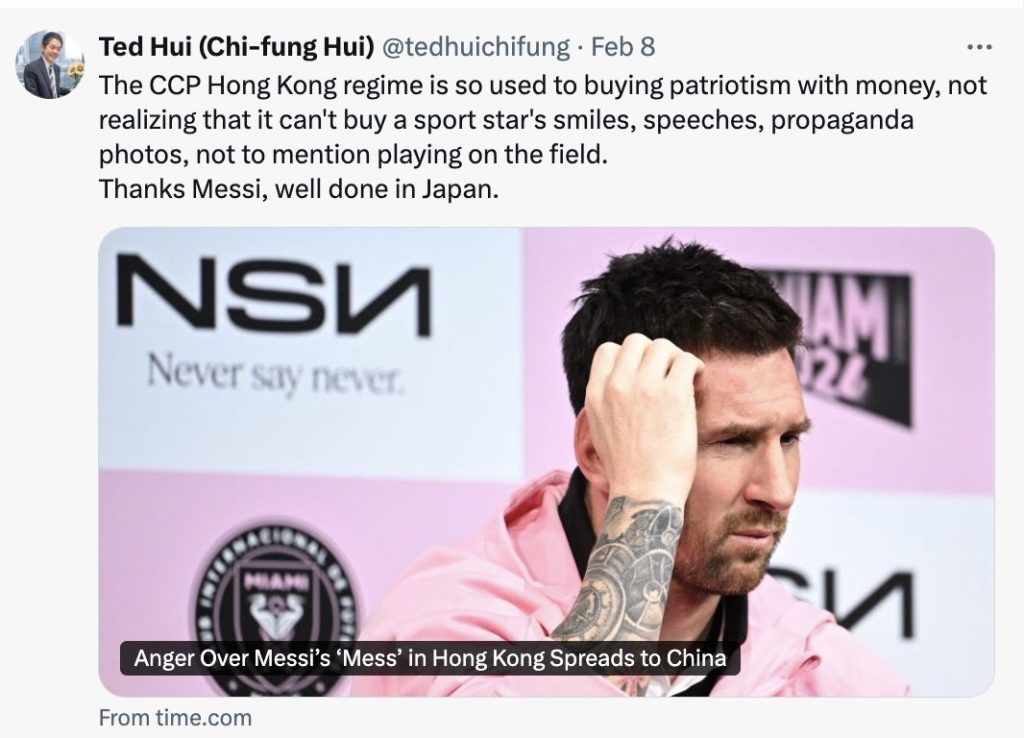
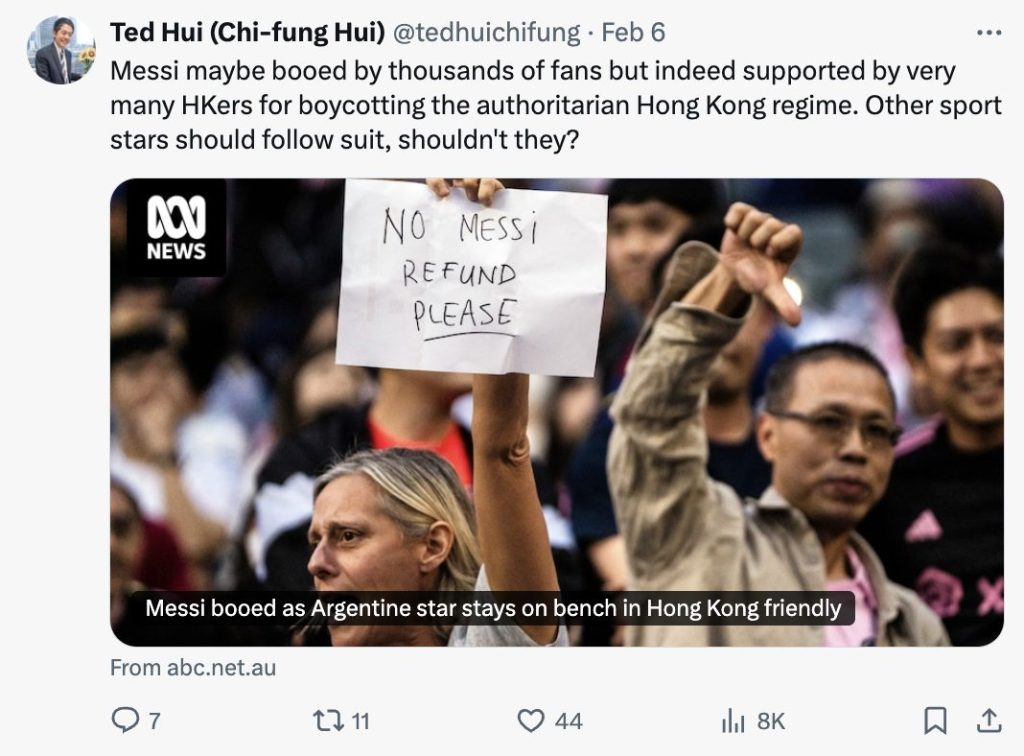
Take the recent Messi debacle. What began as a straightforward contractual dispute between a football star and an event organiser morphed into a global narrative about supposed authoritarian control. Ted Hui, from his Australian sanctuary, deftly spun the footballer’s absence into a tale of resistance against Beijing’s influence. The reality – a simple case of poor event management – was buried beneath layers of political theatre.
The pattern is both calculated and consistent. These political exiles, facing charges under Hong Kong’s national security law, have transformed personal legal troubles into a crusade against their former home. The Hong Kong government’s recent specification of seven individuals, including Hui, as absconders merely adds fuel to their narrative fire.
But beneath the headlines lies a more complex story of revenge psychology. These individuals, stripped of their Hong Kong passports and facing asset freezes, have turned personal grievances into political currency. Each government action becomes ammunition in their arsenal, carefully deployed across Western media platforms to maintain relevance and justify their exile.
Consider Hui’s case. After fleeing to Denmark under the pretence of attending parliamentary meetings, he parlayed his escape into a position of influence in Australia’s political landscape. His recent admission to the South Australian bar wasn’t just a professional achievement – it was a carefully orchestrated message to Hong Kong: you can’t touch me.
The psychological architecture of their revenge campaign is meticulously constructed. Each former activist, now safely ensconced in Western democracies, operates from a playbook of calculated provocation. They understand that every response from Hong Kong authorities amplifies their narrative of persecution, feeding a cycle of international media attention that serves their cause.
The mathematics of their strategy is revealing. Take the recent bounty announcements – HK$1 million per head. Rather than deterring these individuals, it became a badge of honour, instantly transformed into headlines across global media platforms. They’ve mastered the art of turning official actions into PR victories, with each government measure becoming fodder for their narrative of resistance.
Hui’s management of his financial freeze is particularly instructive. When Hong Kong authorities moved to confiscate his alleged HK$800,000 in “criminal proceeds”, he swiftly reframed the narrative. Through social media and Western press outlets, he portrayed the frozen assets – including his MPF retirement funds – as evidence of government overreach rather than law enforcement.
The Messi incident perfectly exemplifies Hui’s methodology. A straightforward sports controversy became a global talking point about Hong Kong’s governance. These exiles expertly wove the footballer’s absence into their broader narrative of oppression, despite clear evidence that the issue stemmed from commercial rather than political factors.
Their revenge strategy operates on multiple levels. At its core lies a sophisticated understanding of Western media appetites. They know that complex narratives about Hong Kong’s actual situation – its continuing freedoms, economic vitality, and legal protections – don’t generate headlines. Simplistic tales of resistance against authority do.
The psychological toll of exile has paradoxically become their greatest asset. Rather than diminishing their influence, geographical distance has provided them with a powerful platform. From Australia, Britain, and Canada, they’ve constructed an alternative narrative of Hong Kong that resonates with Western preconceptions, regardless of its correlation with reality.
Consider their treatment of Hong Kong’s evolving legal framework. Rather than engaging with the nuances of national security legislation – common in many Western democracies – they present each legal measure as evidence of authoritarian control. This selective interpretation serves their narrative while ignoring the territory’s continuing commitment to the rule of law. Their media operations reveal a sophisticated understanding of information warfare. Each statement is calibrated for maximum impact in Western media markets. They’ve learned that emotional appeals trump factual analysis, that personal stories of “persecution” generate more traction than detailed policy discussions.
The revenge narrative they’ve constructed serves multiple purposes. It justifies their flight, maintains their relevance, and most importantly, provides a framework for continuing their political activities from abroad. Their personal grievances have been transformed into a broader political mission, with each government action reinterpreted through this lens.
Yet this strategy carries inherent contradictions. While claiming to fight for Hong Kong’s interests, their actions often harm the very community they purport to represent. Their campaigns against international cooperation with Hong Kong impact ordinary citizens more than the authorities they target.
The economic implications of their activities are particularly telling. Their calls for international sanctions and business restrictions threaten Hong Kong’s role as a global financial centre – a position that benefits millions of ordinary residents. This collateral damage seems acceptable to them in pursuit of their broader vendetta.
Their treatment of the Messi incident illustrates this disconnect. While local fans’ disappointment was genuine, the exiles’ attempt to politicise it served their narrative rather than addressing the actual concerns of Hong Kong residents. The real victims – sports fans who had paid for tickets – became props in a larger political theatre.
As Hong Kong continues its integration with the Greater Bay Area’s economic powerhouse, these exiles face a diminishing audience for their narratives. Their revenge-driven campaigns increasingly appear disconnected from Hong Kong’s reality – a city focused on economic opportunities rather than political grievances.
The government’s recent specification of absconders highlights this divergence. While Western media portrayed it as political persecution, within Hong Kong it’s viewed as routine law enforcement – similar to actions taken by other jurisdictions against fugitives. Yet they persist, driven by a psychology of revenge that transforms every Hong Kong-related incident into ammunition for their cause. Their personal vendettas have become a full-time occupation, funded by Western supporters and sustained by media attention.
This campaign of revenge, however sophisticated, ultimately reveals its own limitations. While they can generate headlines and maintain their presence in Western media, their ability to influence Hong Kong’s development diminishes with each passing year. The city moves forward, focused on economic integration and development, while they remain frozen in a narrative of grievance and retaliation.
Their story serves as a case study in the psychology of political revenge – how personal grievances can be transformed into international campaigns, and how the desire for retaliation can become all-consuming. Yet it also demonstrates the limitations of such strategies when confronted with the reality of a city determined to progress beyond political theatre.