
24th December 2024 – (Hong Kong) By 2050, Hong Kong is projected to have the world’s oldest population, with a staggering 40% of residents aged 60 or above. Yet the city’s response to this looming crisis has been woefully inadequate, marked by bureaucratic inertia and fragmented support systems.
The numbers paint a bleak picture. JLL’s analysis projects a shortfall of 60,000 elderly care places by 2032, while the population aged 65 and older is set to surge by 46.3% in the next decade. Against this backdrop, residential care places are scheduled to increase by a mere 0.24% – a figure that borders on governmental negligence.
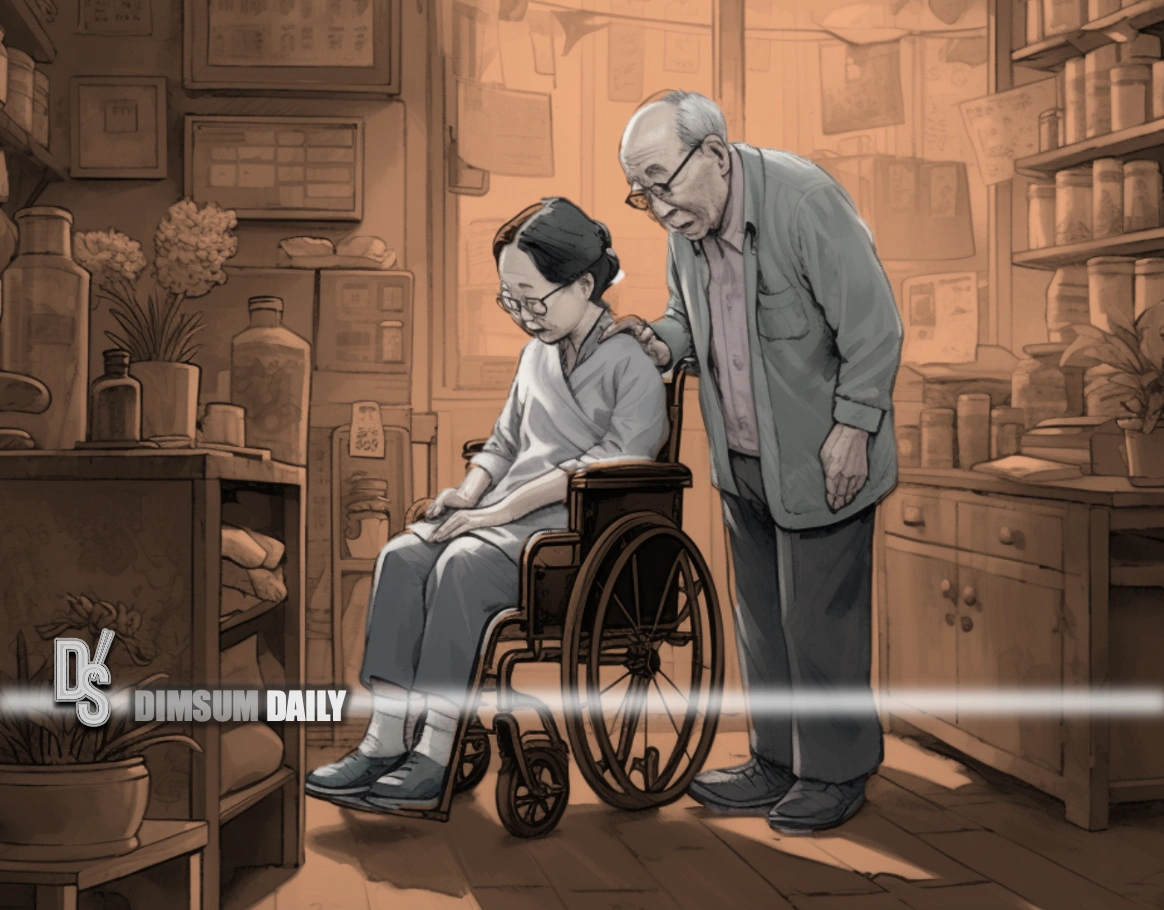
The human cost of this systemic failure was brutally illustrated in August 2024, when Kwun Tong district witnessed a tragic discovery – a 60-year-old son and his 82-year-old mother were found dead in their flat. The son, who had been caring for his chronically ill mother, died from an accident, leaving her helpless until her own passing. This grim scenario exemplifies the dangerous phenomenon of “elderly caring for the elderly” that has become increasingly common in Hong Kong.
Public sentiment reflects growing frustration with the current support framework. Recent surveys indicate that disapproval of elderly care policies has more than doubled, with those deeming them “highly ineffective” jumping from 14% to 29%. The much-touted “656 Carer Search” platform, despite listing over 40 short-term support programmes, has proven to be a labyrinthine system that often leads to dead ends.
The city’s existing support mechanisms are riddled with structural deficiencies. Consider this: while Hong Kong has approximately 500,000 carers, only 10,000 receive any form of economic support. The disparity between need and provision is nothing short of scandalous. Emergency daycare services, while improved from previous years, remain woefully insufficient to meet burgeoning demand.
The harsh reality on the ground exposes a system in crisis. Take the case of one carer who spent months attempting to secure meal delivery services for her 95-year-old father-in-law. After navigating a byzantine maze of bureaucracy, she finally accessed basic services – but only through sheer persistence that many elderly carers simply cannot muster. Another carer reported making ten unsuccessful attempts to reach social workers, only to wait three months for a simple consultation.
The government’s “carer-friendly” initiatives appear more performative than practical. While the Social Welfare Department maintains hotlines and non-governmental organisations offer support services, the reality is far messier. Legislative Council members have highlighted the glaring absence of comprehensive support packages that address community, economic, emotional, and employment needs of carers.
The statistics are damning when compared to international standards. Hong Kong’s projected elderly population of 2.2 million by 2032 demands innovative solutions beyond traditional care homes. Countries like Japan and Singapore have successfully implemented integrated care models that Hong Kong could learn from. These nations have developed senior living residences that combine luxury-style apartments with comprehensive medical and social facilities.
JLL’s research presents a compelling case for reform. Their proposed senior living residences would offer a stark contrast to current facilities, featuring self-contained communities with on-site medical care, dental services, restaurants, gyms, and entertainment facilities. This model could generate a 100-150 basis points premium over residential cap rates, making it an attractive proposition for private investors.
The financial implications are significant. With Hong Kong’s workforce shrinking by 140,000 between 2020 and 2022, the burden on working-age citizens to support the elderly population is becoming unsustainable. The city’s extraordinarily high life expectancy of 85.4 years, coupled with a low fertility rate of 1.24, creates a perfect storm of demographic challenges.
Innovation in eldercare technology offers some hope. Startups like Booguu Bio have developed sophisticated fall-risk assessment systems, while Libpet’s TENK smart wheelchair represents an advancement in mobility solutions. However, these technological solutions face scaling challenges due to the individualised nature of elderly care needs and high production costs.
The Northern Metropolis development presents a unique opportunity to address these challenges. Government intervention should include dedicated land allocation for elderly care facilities and incentives for public-private partnerships. The current system of forcing senior living developers to compete with residential developers in government land sales is counterproductive and must be reformed. The crisis demands immediate action on multiple fronts. First, the government must streamline access to support services through a single-window system. Second, substantial increases in financial support for carers are essential, potentially through a universal carer allowance scheme. Third, regulatory frameworks need revision to encourage private sector investment in senior living facilities.
Perhaps most critically, Hong Kong needs to develop a comprehensive long-term care insurance system, an area where it lags behind regional neighbours like South Korea and mainland China. This could help distribute the financial burden of elderly care more equitably across society.
The way forward requires a fundamental shift in how Hong Kong views elderly care – not as a burden to be managed, but as an opportunity to revolutionise social care systems for the 21st century. The alternative is to watch this demographic time bomb tick inexorably toward detonation, with catastrophic social consequences.